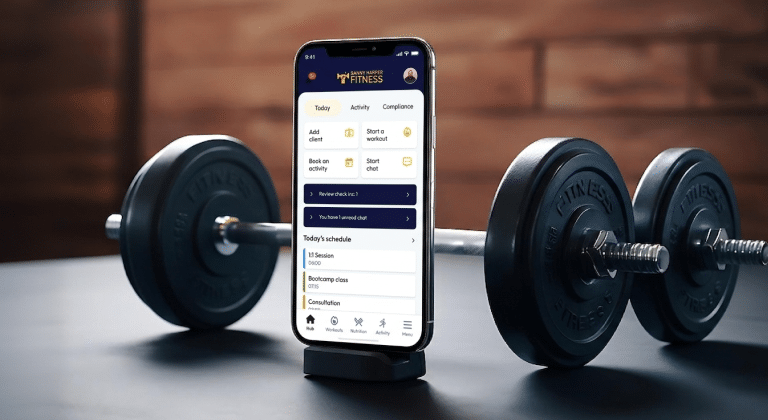
A successful fitness app needs more than workout videos and an attractive interface. Users expect simple tracking, useful guidance, reliable performance, and clear reasons to return. Before development begins, teams need to understand their audience, solve a specific problem, and choose features that support that purpose.
Planning also involves decisions about platforms, privacy, integrations, subscriptions, and long-term maintenance. A focused approach helps control development work while creating an experience that feels useful instead of overloaded.
Start With a Specific User Problem
Strong digital fitness products usually solve a clear problem for a defined audience. Someone starting home workouts has different needs from a marathon runner, bodybuilder, yoga student, or personal trainer.
Begin by identifying the main user and the goal they want to achieve. Then define the actions they will complete most often. A strength-training product, for example, might focus on logging sets, recording weights, viewing previous sessions, and planning future workouts.
Competitor research can also reveal opportunities. Look at how similar products manage onboarding, workout selection, progress tracking, payments, reminders, and subscription cancellation. The purpose is not to copy features. Instead, find areas where users may experience unnecessary steps or unclear information.
See also: 7 Infrared Saunas for Home I’d Actually Tell a Friend to Buy
Choose Essential Fitness App Features First
A fitness app should launch with features that directly support its main purpose. Adding every possible function increases development time and can make navigation harder.
Common features may include:
- User registration and profiles
- Goal setting and onboarding
- Workout plans or exercise libraries
- Video or written exercise instructions
- Activity and progress tracking
- Search and filtering
- Push notifications
- Subscription management
- Privacy and account settings
More specialized products may need GPS tracking, wearable integrations, nutrition logging, live classes, social challenges, or direct communication with coaches.
Each feature should earn its place. GPS makes sense for running and cycling platforms but offers little value in a basic stretching program. Live video may be useful for remote coaching, while prerecorded sessions could serve an on-demand workout library more efficiently.
Design the Experience Before Development
Good user experience makes complex technology feel simple. Users should immediately understand how to start a workout, record progress, find saved programs, and change important settings.
Onboarding should collect only information that improves the service. Asking about goals, experience level, available equipment, and preferred workout types can help personalize recommendations. Long forms filled with unnecessary questions may discourage users before they reach the main product.
Accessibility deserves attention from the beginning. Use readable text, clear labels, suitable contrast, and layouts that work across common screen sizes. Workout screens should also remain easy to read while users are moving.
Navigation should support frequent actions with minimal effort. If starting a daily workout requires opening several screens and menus, the experience needs simplification.
Understand the Main Cost Drivers
The fitness app development cost depends heavily on the project’s scope, platform strategy, interface complexity, backend requirements, and third-party integrations. A straightforward exercise library requires far less engineering than a platform offering live streaming, payments, GPS tracking, wearable syncing, messaging, and personalized programs.
Platform decisions affect development work as well. Teams might build separate native applications for iOS and Android or use a cross-platform framework to share parts of the codebase. The better choice depends on performance requirements, available skills, integrations, and long-term plans.
Design, backend development, quality assurance, project management, and administration tools also contribute to the budget. Costs continue after launch because software needs bug fixes, security updates, operating system compatibility work, and ongoing technical support.
Defining a minimum viable product before requesting detailed estimates usually produces more useful numbers. It also reduces the risk of spending money on features users eventually ignore.
Build a Reliable Technical Foundation
The technical architecture should support both current features and reasonable future growth. Backend systems may manage accounts, workout history, subscriptions, video content, notifications, preferences, and progress data.
Performance matters because fitness products are often used during active sessions. Slow loading, lost workout records, frozen timers, or failed syncing can quickly damage trust.
Developers should test weak connections, interrupted sessions, older supported devices, and unusual user behavior. A person might close the application during a workout, lose internet access, or accidentally record the same activity twice.
Third-party services also require careful evaluation. Payment processors, analytics platforms, video services, mapping tools, and wearable APIs can reduce development work, but they create dependencies. Teams should understand their limits, pricing structure, privacy policies, and update requirements.
Use Personalization With a Clear Purpose
Personalization can make a fitness app more useful when recommendations are easy to understand. Users may appreciate workouts based on available equipment, experience level, preferred session length, and recent activity.
Complicated recommendation systems are not always necessary for an early release. Basic rules can provide meaningful personalization. Someone selecting beginner strength training three days per week could receive an appropriate plan without advanced automation.
Users should also remain in control. Allow them to replace suggested workouts, change goals, adjust schedules, and update preferences.
Fitness guidance should not be presented as medical diagnosis or treatment. People dealing with injuries, medical conditions, or unusual symptoms may need guidance from a qualified healthcare professional rather than automated recommendations.
Test Complete User Journeys
Quality assurance should cover more than individual buttons and screens. Test entire journeys from account creation through regular use.
A testing process should include registration, onboarding, starting a workout, pausing exercises, saving results, reviewing progress, changing a subscription, and returning for another session.
Real user testing can reveal issues that technical checks miss. A timer might be difficult to read during exercise. Instructions may contain too much text. Progress charts may look polished while failing to answer basic questions about improvement.
Testing across different screen sizes, supported operating systems, and network conditions is also essential. Products that connect with wearables or health platforms need additional syncing tests because users expect recorded activity to remain consistent.
Encourage Retention Without Creating Pressure
People need useful reasons to return, but constant notifications can become annoying. Engagement tools should support personal goals rather than create unnecessary pressure.
Weekly summaries, progress milestones, workout schedules, new training programs, and customizable reminders can encourage regular use. Notification controls should allow users to choose what they receive and how often.
Content requires maintenance as well. An exercise library that never changes can eventually feel limited. New programs, refreshed training plans, or seasonal challenges can give returning users something different without redesigning the entire product.
Retention data should also guide future decisions. If users regularly stop during onboarding or abandon certain workouts, those patterns deserve investigation before more features are added.
Protect User Data and Build Trust
Digital fitness services may collect age, weight, activity history, location, payment details, and other sensitive information. Teams should collect only the data required to provide the intended service.
Privacy controls need clear wording. Users should understand why information is requested, how it is stored, whether third parties receive it, and what account deletion options are available.
Security should be part of development from the beginning. Secure data transmission, appropriate authentication, careful permission management, software updates, and controlled system access all contribute to a safer product.
Location and health-related permissions deserve particular care. Avoid requesting access simply because a device makes the information available.
Launch Focused, Then Improve With Evidence
A first release does not need every idea from the original roadmap. It needs a reliable core experience that solves the user’s main problem well.
After launch, study how people actually interact with the product. Look for onboarding drop-offs, frequently completed activities, ignored features, subscription issues, and recurring support questions. Combine behavioral information with direct user feedback before deciding what to build next.
Future planning should revisit the fitness app development cost whenever major features are proposed. Wearable integrations, coaching tools, live video, advanced analytics, or social functions should have a clear connection to user needs or business goals.
Successful products grow through careful priorities rather than feature volume. Define the audience, simplify the main experience, protect user information, test real workflows, and improve the service based on evidence from actual use.